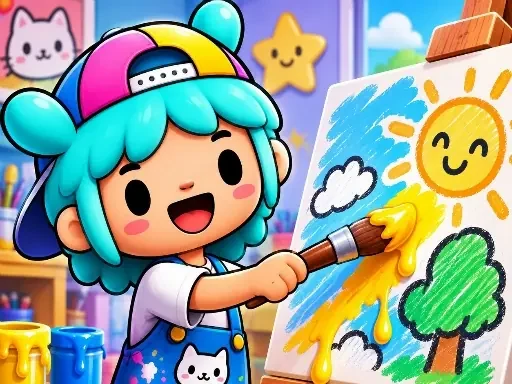
Coloring - Games
Coloring in games transcends simple aesthetics, serving as a core design element that communicates information, guides player interaction, and establishes emotional tone. It functions as a universal language: red often signals danger or aggression, blue denotes calm or interactable objects, and green typically represents safety or progression. Beyond UI and environmental storytelling, coloring mechanics themselves can be the gameplay, as seen in puzzle games where matching or spreading colors defines the core challenge. This fundamental tool shapes player perception, directs attention, and can transform a functional interface into an evocative, memorable experience.